
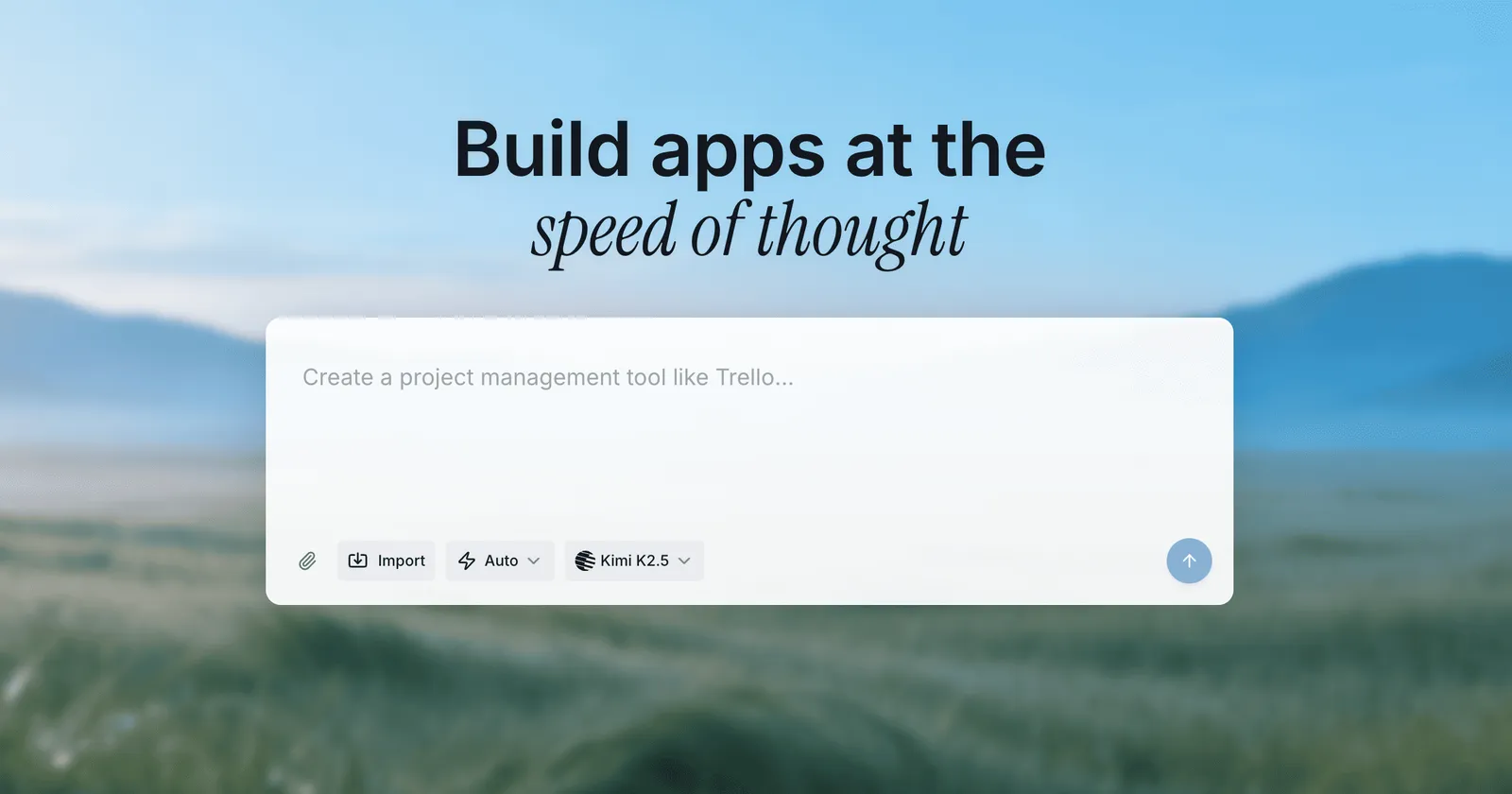
Overview
Ideavo is a browser-based AI application builder that converts conversational prompts into deployable full-stack software. It targets founders, product managers, non-technical builders, agencies, and developers who need working websites, mobile apps, internal tools, dashboards, or games without hand-assembling a stack. The product positions itself as a zero-cost alternative to Lovable, Bolt.new, v0.dev, Replit, and Emergent, competing on bring-your-own-key model access and code export rather than metered generation credits.
Key Features
- Provider-agnostic model routing — plug in an existing API key or subscription from OpenAI, Anthropic, Google, OpenRouter, OpenCode, or Kimi, with no markup applied to token consumption.
- Automated backend scaffolding — authentication, database schemas, payments, permissions, and business logic are generated from the product description instead of configured by hand.
- Monorepo initialization — project structure, TypeScript configuration, folder hierarchy, and dependency installation are set up during the first session.
- Multi-target compilation — a single codebase can ship to web, mobile, and game runtimes without additional configuration.
- Repository interoperability — existing GitHub projects import cleanly, and generated code exports back to version control.
- Deployment wiring — Vercel and Railway integrations, custom domain attachment, and one-click pushes to production branches.
- Agents, MCP servers, skills, and workflows — parallel task execution, context-aware tool servers, reusable skill modules, and multi-step automation chains.
- Live collaboration — shared sessions where every participant sees edits as they happen.
- Enterprise safeguards — SOC 2 certification, encryption at rest, audit trails, and SSO support.
Use Cases
Product managers convert a spec into a clickable prototype ahead of the next standup, removing the engineering ticket bottleneck that slows validation. Founders reach a deployable MVP before fundraising, compressing quarter-long build cycles into days. Non-technical builders with domain expertise describe intent in plain language and receive working code plus provisioned infrastructure. Professional developers skip repetitive boilerplate such as auth flows, database models, and permission layers, concentrating instead on differentiated logic. Agencies absorb more concurrent client work without expanding headcount, while educators demonstrate live software in lectures instead of static mockups.