
Introduction
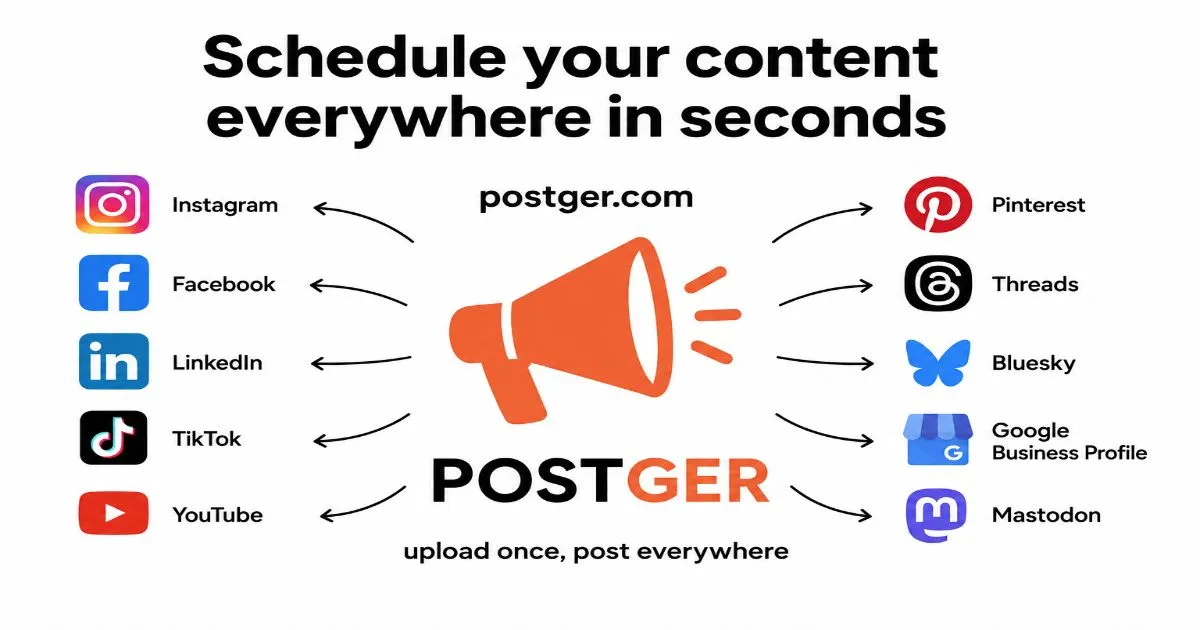
Postger is a social media management platform designed for teams and agencies that need to schedule, approve, and publish content across multiple social networks from one dashboard. It supports over 10 platforms including Facebook, Instagram, LinkedIn, TikTok, YouTube, Pinterest, Threads, Bluesky, Mastodon, and Google Business Profile. The platform emphasizes direct API integrations rather than aggregators, ensuring full feature support for each network. With a visual calendar, approval workflows, client portals, and analytics, Postger aims to replace multiple tools with a single workspace.
Key Features
Postger offers a comprehensive set of features tailored for collaborative social media management:
-
Content Calendar: A drag-and-drop calendar that supports month, week, or day views. Users can schedule posts, set recurring slots, and manage queues. The calendar provides a visual overview of all planned content across platforms.
-
Multi-Platform Publishing: A single composer allows users to create posts for multiple platforms simultaneously. Each post can be customized per network with platform-specific copy, media attachments, and previews. Supported platforms include Facebook, Instagram, LinkedIn, TikTok, YouTube, Pinterest, Threads, Bluesky, Mastodon, and Google Business Profile.
-
Idea Board: A Kanban-style board for brainstorming and organizing post ideas. Cards can be moved from brainstorm to draft to scheduled, providing a structured workflow for content ideation.
-
Approval Workflows: Posts can be routed through client or manager approval with inline comments. Clients can review and approve content via a branded portal without needing a Postger account.
-
Client Portal: A branded portal where clients can review, comment, and approve content. This is particularly useful for agencies managing multiple client accounts.
-
Unified Inbox: All comments, DMs, and mentions from every connected platform are aggregated into a single feed. This simplifies engagement management and ensures no messages are missed.
-
Media Library: A centralized asset library with folders, tags, and instant search. Users can store and organize images, videos, and other media for reuse across posts.
-
Analytics & Reporting: Track engagement, reach, and growth with per-post and channel-level metrics. Reports can be exported as PDF or CSV. KPI cards and trend charts help identify what works.
-
AI & Intelligence: AI-powered content scoring, auto-generated captions, and an open API for AI agents. The AI Agent API allows external tools to draft content, suggest hashtags, and automate publishing workflows.
-
Teams & Workspaces: Custom roles, permissions, and isolated multi-brand workspaces under one account. The Agency plan offers unlimited users and workspaces with no per-seat fees.
-
Smart Queues: Recurring posting slots with auto-scheduling. Users can set up queues once and fill them with content over time.
-
Platform Integrations: Direct API connections to 12+ social networks. The platform supports full feature sets including publishing, comments, DMs, and insights where available.
How It Works
Postger is a web-based application accessible via browser. After signing up for a free trial, users connect their social media accounts through direct API integrations. The onboarding process guides users through setting up their first workspace and connecting profiles.
The main dashboard provides access to the content calendar, composer, idea board, inbox, and analytics. Users can create posts using the multi-platform composer, selecting which accounts to publish to and customizing content per platform. Posts can be scheduled immediately or added to a queue for later publishing.
The approval workflow is straightforward: a team member creates a post and sends it for review. The reviewer receives a notification and can approve, reject, or comment on the post. Clients can access a branded portal to review content without logging into Postger.
The unified inbox aggregates all social interactions, allowing users to respond to comments and messages from one place. Analytics are updated in real-time, providing insights into post performance and audience growth.
Use Cases
-
Social Media Agencies: Agencies managing multiple client accounts benefit from the client portal, approval workflows, and unlimited workspaces. The ability to add unlimited team members on the Agency plan eliminates per-seat costs.
-
Marketing Teams: In-house marketing teams can collaborate on content calendars, use the idea board for brainstorming, and track performance with analytics. The approval workflow ensures brand consistency.
-
Solo Creators: Individual content creators can use the Starter plan to schedule posts across up to 5 profiles. The visual calendar and media library help organize content efficiently.
-
Growing Teams: The Pro plan suits teams that need more profiles and workspaces. Features like CSV bulk import and RSS feed subscriptions streamline content sourcing.
Pricing & Value
Postger offers three pricing tiers with annual and monthly billing options:
-
Starter: $17/month (annual) or $19/month (monthly). Includes 5 profiles, 1 workspace, 1 user, unlimited scheduled posts, basic analytics, and email support.
-
Pro: $25/month (annual) or $29/month (monthly). Includes 15 profiles, 3 workspaces, 3 users, multiple accounts per platform, content templates, queues, CSV bulk import, basic inbox, analytics with trends, RSS feed subscriptions, and email support.
-
Agency: $41/month (annual) or $49/month (monthly). Includes unlimited profiles, workspaces, and users. Features full inbox with SLA tracking, approval workflows, client portal, custom roles, advanced analytics, AI tools, agent API, webhooks, and priority support.
All plans include a 7-day free trial with no credit card required. The Agency plan offers the best value for teams and agencies due to unlimited users and workspaces.
Final Verdict
Postger is a robust social media management platform that competes with tools like Buffer, Hootsuite, and Later. Its strengths lie in the approval workflows, client portal, and unlimited user pricing on the Agency plan. The direct API integrations ensure full feature support for each platform, which is a significant advantage over aggregator-based solutions.
The platform is well-suited for agencies and teams that need collaborative features and client management. Solo creators may find the Starter plan sufficient, but the Pro and Agency plans offer more value for growing teams.
Potential drawbacks include the lack of a mobile app (currently web-only) and the absence of some advanced analytics features found in enterprise tools. However, for most teams, Postger provides a comprehensive and fairly priced solution.
For more details, check out their pricing or explore the features page. You can also read about their approach to platform integrations.