
Introduction
Case Cub positions itself as an all-in-one AI-driven legal study platform tailored specifically for law students. The homepage boasts access to more than 20,000 interactive case briefs, AI-powered quiz generation, smart flashcards, and Cub Chat, a personal AI assistant designed to demystify complex legal concepts. It is not just another flashcard app; it integrates multiple study modalities into a single workflow, potentially transforming how law students prepare for classes, exams, and even the bar. This review examines the platform’s core features, usability, and overall value based on the information presented on their website.
Key Features
The feature set of Case Cub is comprehensive, covering nearly every aspect of legal study. Below are the standout components:
-
Comprehensive Case Briefs: The platform offers over 20,000 interactive case briefs that cover cases from the 1600s to the present day. These are not simple summaries; they include interactive elements and full opinions with smart navigation. The briefs are structured to highlight key elements such as facts, procedural history, issues, holdings, and reasoning, allowing students to grasp the essential points quickly. The case library is searchable by case name, citation, or topic, making it easy to find relevant material.
-
AI-Powered Quiz Studio: This tool generates custom quizzes instantly from any legal material. Users can input notes, case text, or textbook excerpts, and the system creates multiple question types, including multiple-choice, true/false, and short answer. The quiz studio also includes performance tracking and analytics, helping students identify weak areas. A timed practice mode simulates exam conditions, which is invaluable for building time management skills.
-
Smart Flashcard System: Flashcards are a staple of legal study, and Case Cub enhances them with AI. The system can automatically generate flashcards from user-provided content, eliminating the manual work. Spaced repetition ensures efficient review, while progress tracking monitors retention across subjects. Custom decks can be organized by course or topic, allowing for tailored study sessions.
-
Interactive Cub Chat: This is a 24/7 AI assistant integrated into the platform. It can answer legal questions, explain complex concepts, dive into case specifics, and even assist with citation verification. Cub Chat is designed to act as a virtual tutor, providing contextual explanations that are often more accessible than dense textbook prose.
-
Outlines and Exam Prep: Beyond the headline features, the platform includes comprehensive outlines and exam preparation tools. These resources are integrated with the other features, allowing students to study in a cohesive ecosystem rather than juggling multiple disconnected applications.
-
Free Tools: The website lists several free utilities, including an Issue Spotter, Personal Jurisdiction Analyzer, Diversity Jurisdiction Calculator, Transfer Predictor, and an MPRE Practice Test. These tools provide immediate value even before committing to a subscription, making Case Cub a low-risk platform to explore.
-
Progress Tracking Across Subjects: The platform tracks learner progress across different courses, giving a bird’s-eye view of strengths and weaknesses. This data could be invaluable for planning study schedules and allocating time effectively.
How It Works
Getting started with Case Cub is straightforward. Prospective users can sign up for a free trial, which grants full access to all premium features. Once inside, the learner is greeted by a dashboard that links to the case library, quiz studio, flashcard system, and Cub Chat.
Navigating the case library is simple: students can search by case name, citation, or legal topic. The interactive briefs are organized with tabs for facts, issue, holding, reasoning, and more, enabling quick review. Full opinions are available with smart navigation, allowing users to jump to relevant sections without scrolling endlessly.
The quiz and flashcard generation is intuitive. Users can upload or paste text into the system, and the AI processes it to create study materials. For instance, a student preparing for a contracts exam could input their lecture notes, and within seconds have a set of practice questions and flashcards. This reduces the time spent on manual creation and maximizes study efficiency.
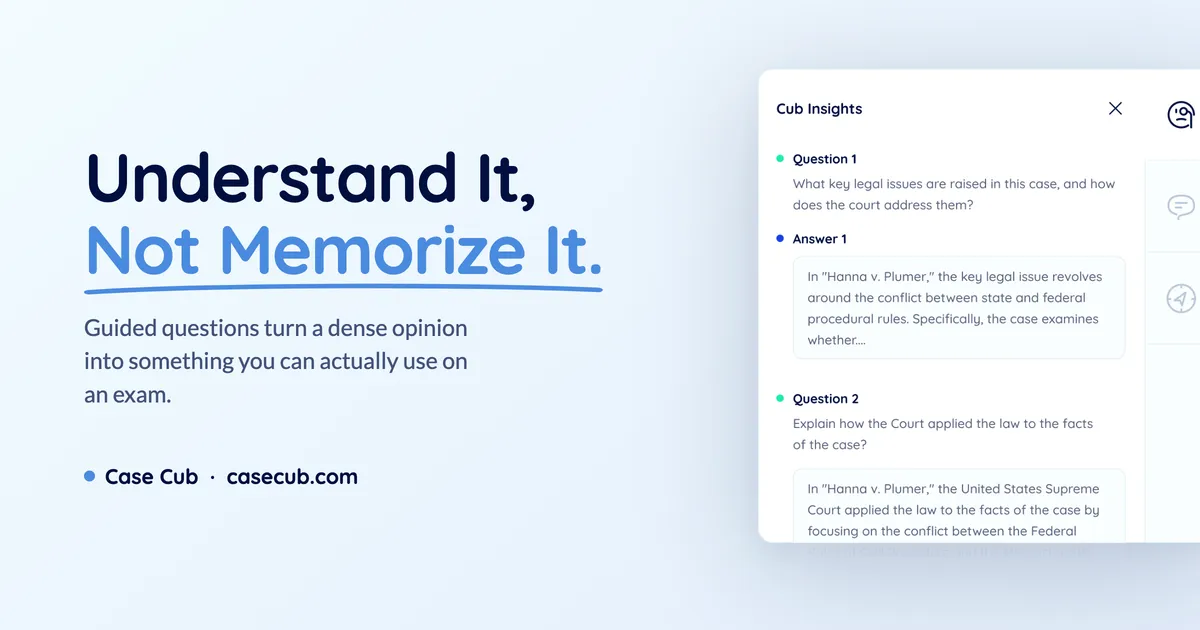
Cub Chat is accessible from anywhere in the app, acting as a contextual assistant. If a student is reading a case brief and doesn't understand a legal term, they can highlight it and ask Cub Chat for an explanation. The AI responds with a clear, context-aware answer, often citing relevant case law. This interactive approach mirrors having a study partner available at all hours.
Progress tracking is integrated into each feature. Quiz scores, flashcard reviews, and even chat interactions contribute to a learning analytics dashboard. This allows students to see patterns, such as consistently low performance in torts negligence questions, and focus their efforts accordingly.
The platform also includes a series of free tools for quick calculations, such as the Personal Jurisdiction Analyzer. These tools are accessible from the footer and provide immediate utility for students tackling specific legal problems.
Use Cases
Case Cub is designed for law students, but the specific use cases vary by stage of study:
-
1L Year: New law students often struggle with the sheer volume of reading and case briefing. The interactive briefs are a lifeline, allowing them to quickly understand the key aspects of a case before class. The quiz generator helps them test their understanding and prepare for cold calls.
-
Exam Preparation: For upperclassmen, the platform becomes a study engine during exam season. The ability to generate custom quizzes and flashcards from any material makes it easy to cover a semester’s worth of content efficiently. The timed practice mode simulates the pressure of real exams, sharpening issue-spotting and time management skills.
-
Bar Exam Prep: While not explicitly marketed as a bar review course, the tools can supplement traditional bar prep. The comprehensive case briefs and AI chat can help with substantive legal concepts, while the flashcard system is ideal for memorizing bar-heavy rules.
-
Sample Testing and Diagnostics: The free tools, such as the MPRE Practice Test and Transfer Predictor, are useful for students in specific situations. For example, a student considering transferring law schools could use the Transfer Predictor to gauge their chances.
-
Hyper-Specialized Study Groups: Collaboration is not mentioned, but individual students can use the platform to create custom decks and quizzes to share with study groups, enhancing collective preparation.
Pricing & Value
The website does not display specific pricing tiers on the homepage, but it emphasizes a free trial with full access and no long-term commitment. The call-to-action is "Start Free Trial. Cancel Anytime." This suggests a subscription model, likely on a monthly or annual basis. The value proposition is clear: replacing multiple disjointed study tools (case brief databases, flashcard apps, quiz generators, and legal dictionaries) with one integrated platform.
For law students, time is the scarcest resource. The automation of brief generation, quiz creation, and flashcard development could save dozens of hours per semester. The inclusion of AI chat, which often costs extra, adds further value. The free tools section alone provides meaningful utility, making it a low-risk try.
While the exact cost is not transparent until visiting the pricing page, the value seems aligned with other premium study aids. Given the breadth of features, Case Cub likely offers a competitive price point in the legal education technology market.
Final Verdict
Case Cub is a powerful and well-designed legal study platform that leverages AI to address the biggest pain points in law school: information overload and inefficient study habits. The dense feature set is impressive, and the integration of case briefs, quizzes, flashcards, and chat into a single interface eliminates the need for multiple subscriptions. The interactive briefs are among the best available, and the AI quiz generator is a genuinely useful tool.
The main limitations are its narrow focus on law students, which is intentional, and the lack of visible pricing upfront. Additionally, users will need to trust the AI-generated content, though the platform claims meticulous review. For law students, especially those in their 1L year or preparing for the bar, Case Cub is worth a serious look. The free trial provides an opportunity to experience the platform's capabilities without risk. Those who embrace its tools may find themselves studying smarter, not harder, and the about page offers further insight into the team behind this promising educational technology.